



21/06/2026
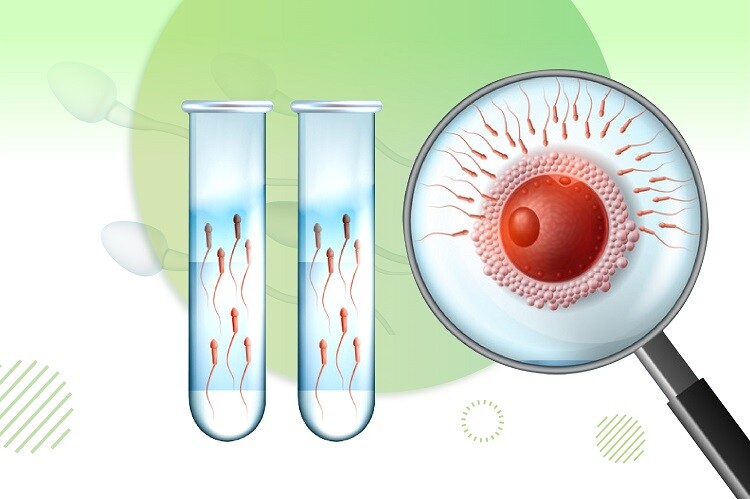
In vitro fertilization (IVF) is a method of assisted reproduction by combining oocytes and sperm outside the body. The embryo formed after the oocyte and sperm are successfully combined will be transferred back to the woman’s uterus. The embryo then implants and develops into a fetus as in cases of natural conception. This is the most modern assisted reproductive method and is very popularly applied to infertile couples today.
Factors affecting the success rate of IVF
For infertile couples preparing to undergo assisted reproduction, the success rate of IVF is very important information, understanding these statistical ratios can help clients choose, make informed decisions before treatment .
The success rate of IVF depends on many factors, which include:
However, not every cycle of treatment results in embryo transfer, and a small percentage of women have either no oocytes or immature oocytes after retrieval or have mature oocytes after retrieval but no fertilization to form an embryo resulting in no embryo to transfer.
Success rate after IVF treatment at Andrology and Fertility Hospital of Hanoi
Currently, 100% of the patients undergoing in vitro fertilization at the Andrology and Fertility Hospital of Hanoi are using ICSI (Intracytoplasmic Sperm Injection) technique to improve their fertility.
Post-treatment success rates are monitored, analyzed and reported periodically every six months. According to statistics from January 2025 to December 2025 are as follows:
Table 1: IVF success rate with female patients under 35 years old:
| Outcome | Embryo transfer type | Day-3 embryos | Day-5 embryos |
| Positive pregnancy test rate | Fresh embryo transfer | 27/84 (32,1%) | 50/128 (39,1%) |
| Frozen embryo transfer | 339/673 (50,4%) | 3526/4480 (78,7%) | |
| Clinical pregnancy rate | Fresh embryo transfer | 18/81 (22,2%) | 35/127 (27,6%) |
| Frozen embryo transfer | 243/655 (37,1%) | 2,857/4,331 (66,0%) | |
| Progressing pregnancy rate | Fresh embryo transfer | 16/80 (20,0%) | 26/119 (21,8%) |
| Frozen embryo transfer | 195/619 (31,5%) | 2,316/3,863 (60,0%) |
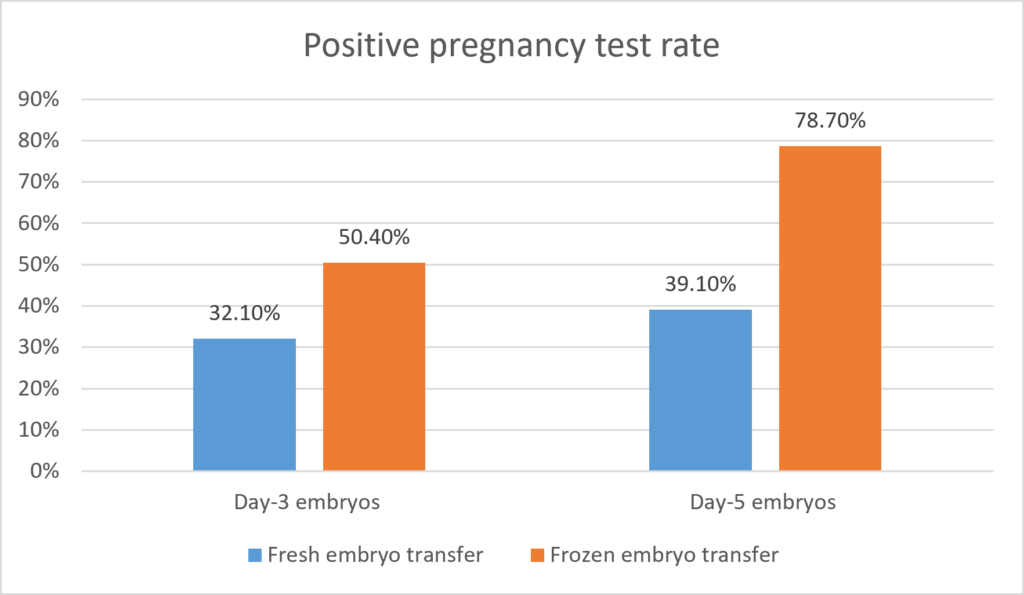
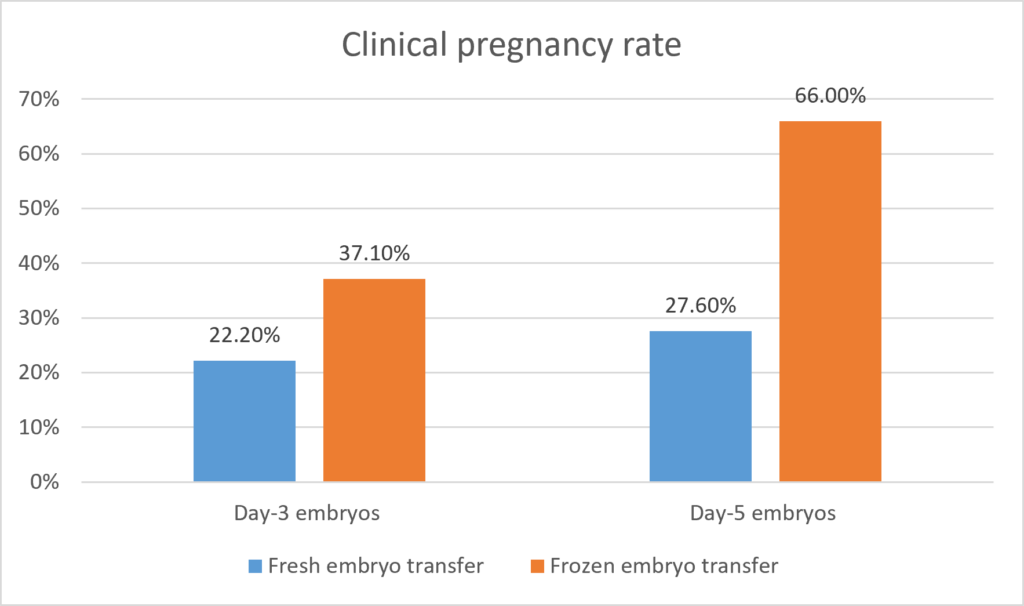
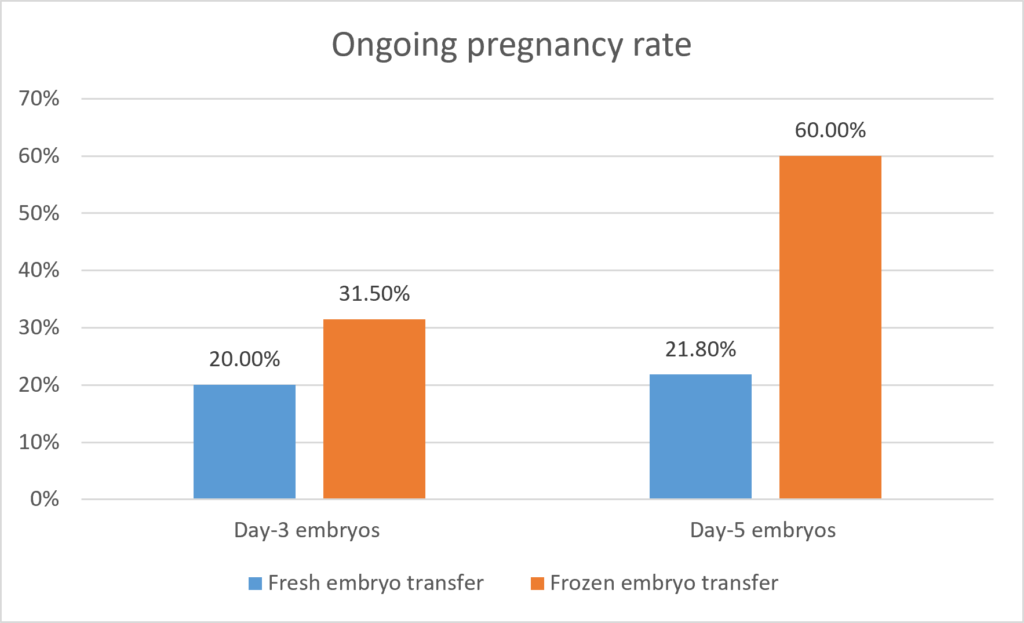
Table 2: IVF success rates with female patients aged 35-39 years:
| Outcome | Embryo transfer type | Day-3 embryos | Day-5 embryos |
| Positive pregnancy test rate |
Fresh embryo transfer |
10/31 (32,3%) | 13/51 (25,5%) |
|
Frozen embryo transfer |
93/229 (40,6%) | 731/1,041 (70,2%) | |
| Clinical pregnancy rate |
Fresh embryo transfer |
6/30 (20,0%) | 8/49 (16,3%) |
|
Frozen embryo transfer |
60/223 (26,9%) | 566/986 (57,4%) | |
| Ongoing pregnancy rate |
Fresh embryo transfer |
4/29 (13,8%) | 5/48 (10,4%) |
|
Frozen embryo transfer |
43/206 (20,9%) | 443/885 (50,1%) |
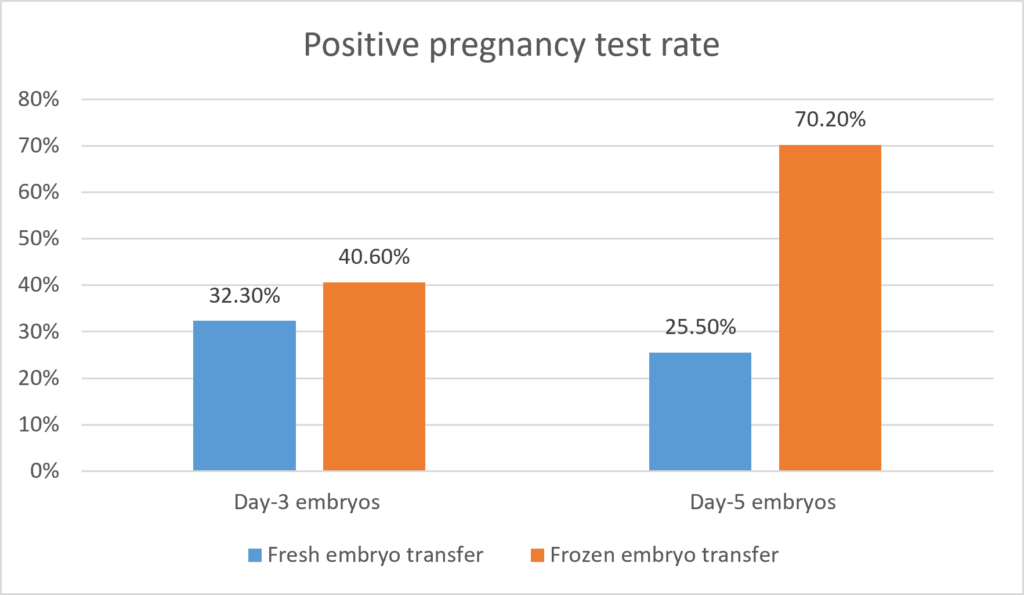
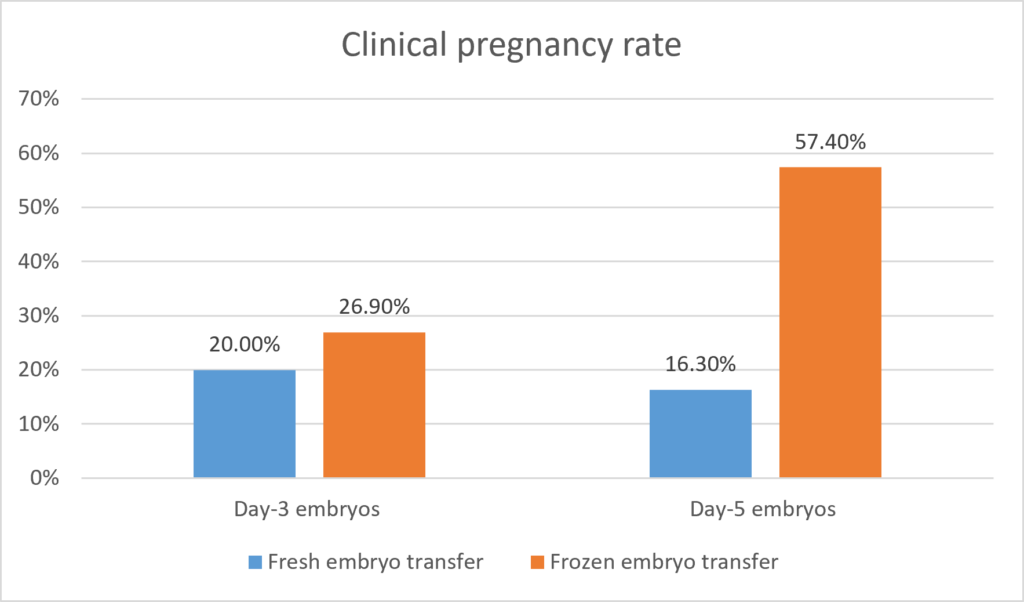
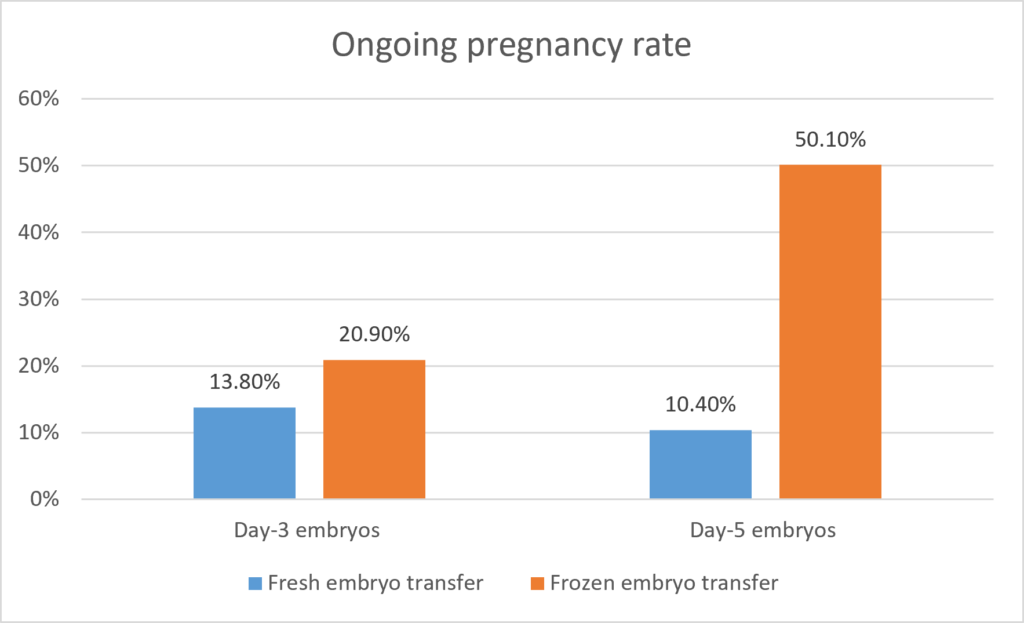
Table 3: IVF outcomes among women aged ≥40 years in 2025:
| Embryo transfer type | Day-3 embryos | Day-5 embryos | |
| Positive pregnancy test rate |
Fresh embryo transfer |
2/14 (14,3%) | 8/20 (40,0%) |
|
Frozen embryo transfer |
17/62 (27,4%) | 107/180 (59,4%) | |
| Clinical pregnancy rate |
Fresh embryo transfer |
1/14 (7,1%) | 3/20 (15,0%) |
|
Frozen embryo transfer |
7/62 (11,3%) | 78/174 (44,8%) | |
| Progressing pregnancy rate |
Fresh embryo transfer |
1/14 (7,1%) | 2/18 (11,1%) |
|
Frozen embryo transfer |
4/59 (6,8%) | 66/163 (40,5%) |
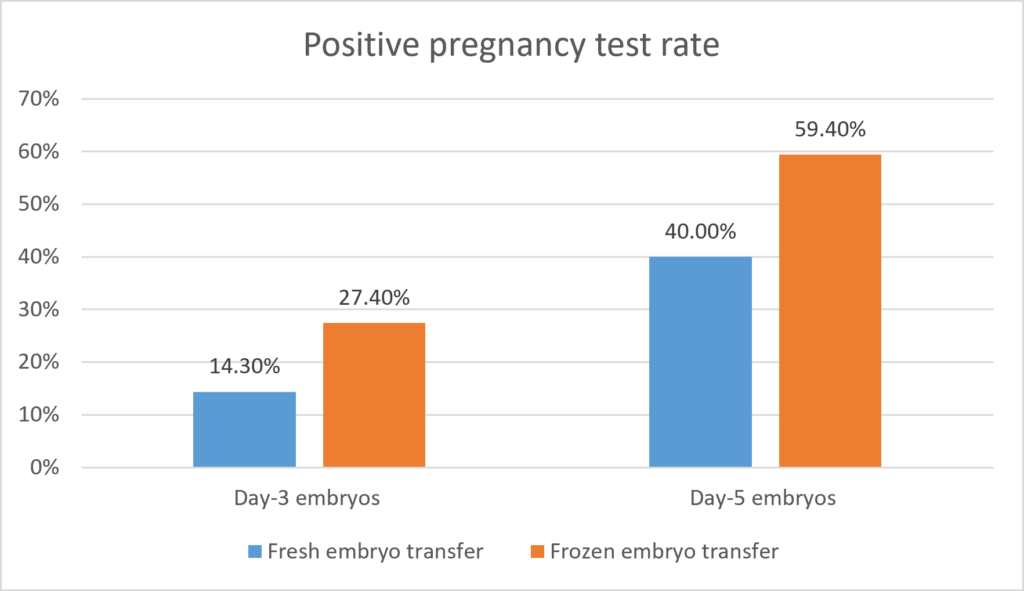
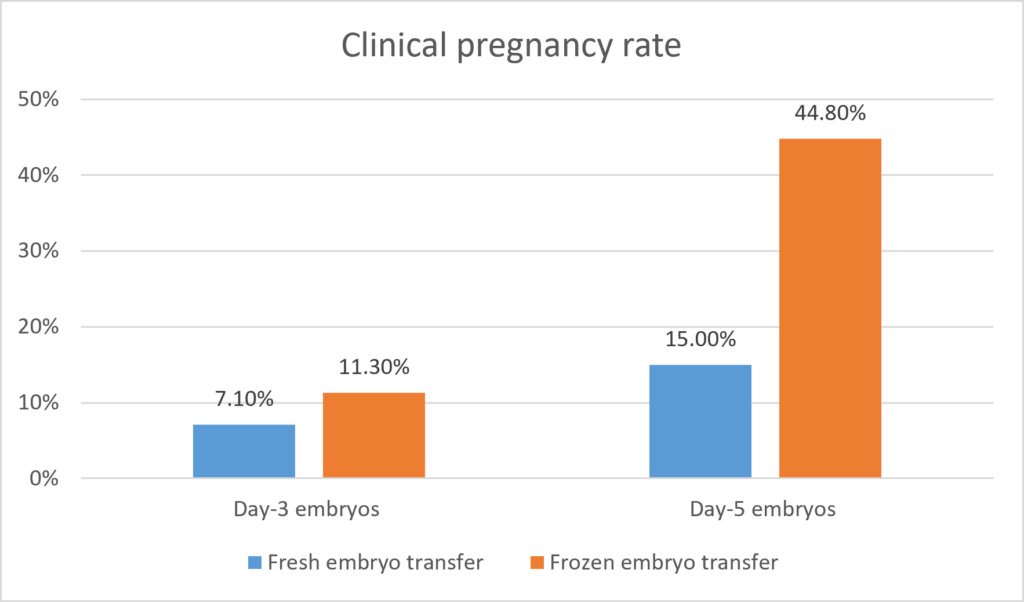
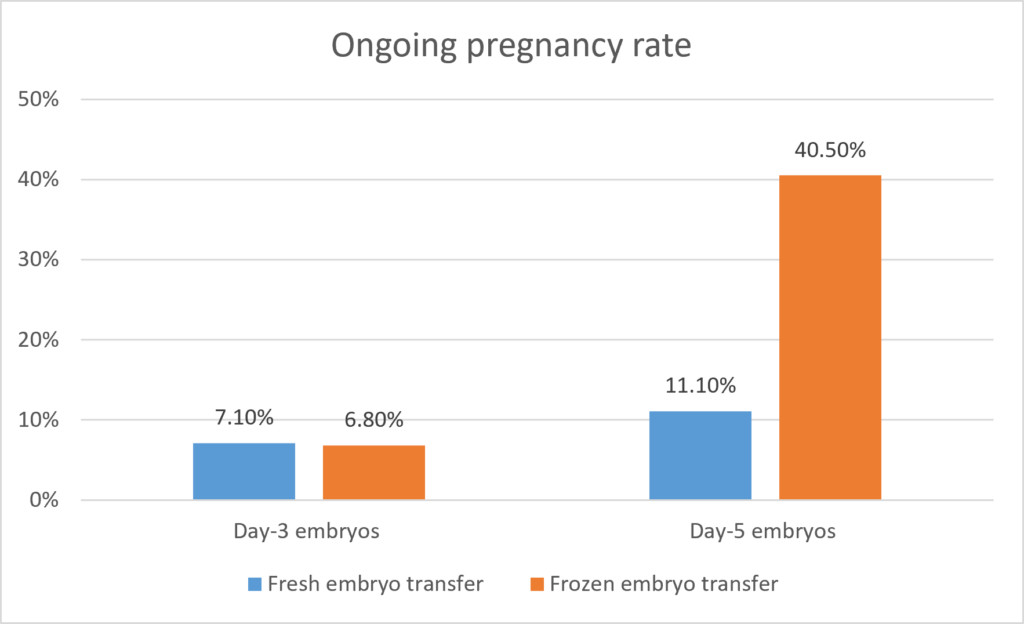
Table 4: Live birth rates in IVF by maternal age and transferred embryo stage, 2024
| Maternal age | Embryo day 3 | Embryo day 5 | Overall |
| <35 years old | 223/693 (32,2%) | 2.123/3.803 (55,8%) |
2.346/4.496 (52,2%) |
| 35-39 years old | 64/238 (26,9%) | 293/723 (40,5%) |
357/961 (37,2%) |
| >40 years old | 8/73 (10,9%) | 54/145 (37,2%) |
62/218 (28,4%) |
|
Overall |
295/1.004 (29,4%) |
2.470/4.671 (52,9%) |
2.765/5.675 (48,7%) |
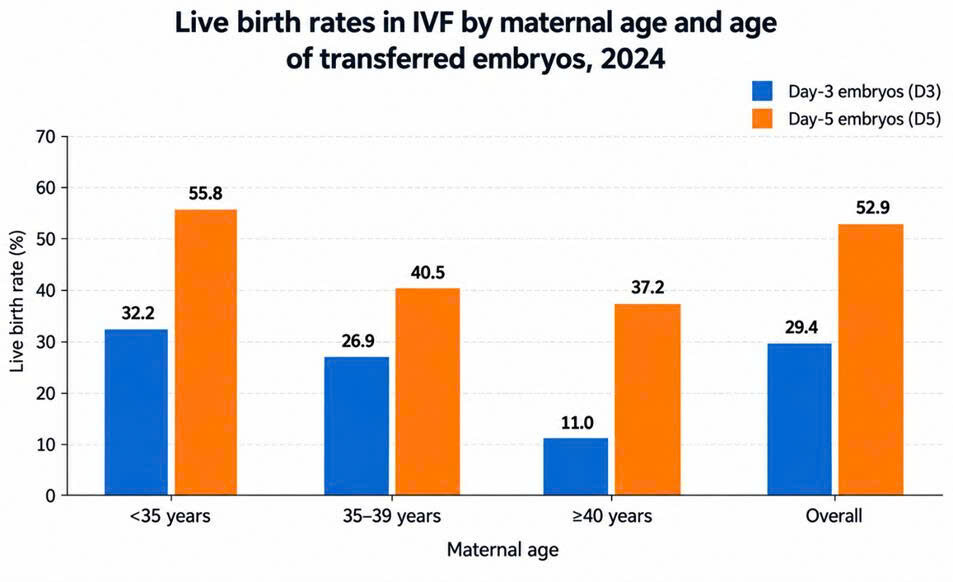
At Andrology and Fertility Hospital of Hanoi, we are proud of the success rates we achieve when patients perform IVF at the hospital and are committed to improving IVF success rates by applying the latest technologies, promote research – continuous training of doctors – embryologists as well as individualization in patient care/treatment.
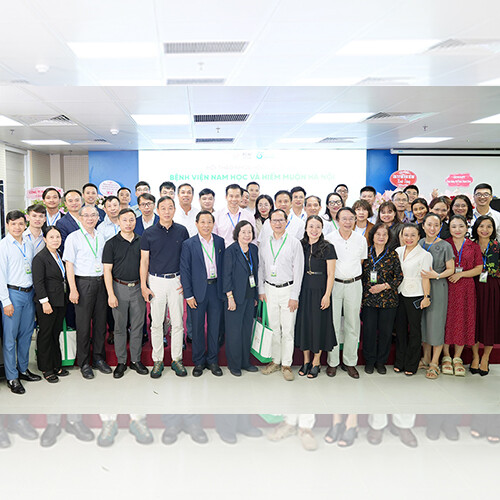
On the morning of September 22, 2024, the Andrology and Fertility Hospital of Hanoi (AF HANOI) successfully held the “5th Scientific Conference”. This event was a part of a series of activities in honor of the hospital’s...
In recent years, infertility has become one of the prominent issues of modern medicine, pressure from work, unscientific lifestyle, along with environmental pollution factors, and mutated genes have been increasing the rate of infertility...
Definition Infertility is “a disease of the reproductive system defined by the failure to achieve a clinical pregnancy after 12 months or more of regular unprotected sexual intercourse.” Primary infertility refers to couples who...

Artificial insermination is known to be an effective method of promoting reproduction, which is widely used in the treatment for subinfertility and infertility couples in order to provide many opportunities for these couples become...

What is in vitro fertilization (IVF)? IVF is a technique to treat for infertility couple that the fertilization occurs in glass instead of in the body. The woman’s eggs and the man’s sperm are fertilized in a glass (petri dish)...

ICSI (Intra-Cytoplasmic Sperm Injection) For the first time in 1959, Chang succeeded in performing artificial insemination between rabbit’s egg and sperm in test tube environment. Since then, scientists have been constantly researching...

A premarital medical examination is one of the most important, must-do thing before getting married . However ,when discussing about this ,people seem to be vague. We all lowered the importance of a premarital examination, some even...

Pre-implantation genetic diagnosis (PGD) – New hope for infertility. Pre implantation genetic diagnosis is a fantastic chance to avoid genetic diseases in new-born babies. Morning 24/4, Centre of Embryology Training and Research...


