



12/09/2026
HANOI — On 9 and 10 September 2026, the Andrology and Fertility Hospital of Hanoi (AF HANOI) hosted Donna Close, an auditor of the Reproductive Technology Accreditation Committee (RTAC) under Australia’s Fertility Society, for its regular accreditation review.
The visit marked the fifth consecutive year that AF HANOI has held international RTAC accreditation for assisted reproductive technology. It is more than a marker of the hospital’s ongoing standardization and improvement — maintaining the accreditation also carries direct benefits for patients, embedding standards of quality, safety and control into every stage of the treatment process.

AF HANOI welcomed Donna Close, an auditor of the Reproductive Technology Accreditation Committee (RTAC) under Australia’s Fertility Society.
Five Years of RTAC: From Accreditation to a Culture of Quality Management
In 2022, AF HANOI became one of the first facilities in northern Vietnam to earn international RTAC accreditation for assisted reproductive technology.
Achieving accreditation for the first time was an important milestone. But maintaining it, year after year, has required a continuous process of review, assessment and improvement across the entire hospital system.
RTAC is a specialized accreditation framework for institutes of assisted reproductive technology. Its assessments span quality management, patient safety, staff competency, laboratory operations, and the handling of gametes and embryos, as well as clinical procedures and treatment outcomes.
That scope means quality cannot be confined to a single department or a single step in the process — it has to be sustained across the whole system.
Procedures must be standardized. The responsibilities of each role must be clearly defined. Clinical work must be documented and traceable. Risks must be identified and controlled. And any shortfalls must be reviewed and used as the basis for further improvement.
After five years, the most significant thing RTAC has brought AF HANOI is not simply an international accreditation, but the development of a continuous quality-management cycle: standardization – control – assessment- improvement.

During the 9–10 September assessment, AF HANOI once again underwent its regular review under RTAC standards.
When International Standards Shape Every Step of Treatment
A single cycle of assisted reproductive treatment involves many staff members, several departments and a long sequence of steps, so quality cannot rest on any one individual or isolated procedure.
At AF HANOI, doctors, embryologists, nurses and other staff work within one continuous system of checks. Each role is a link in a chain that keeps information, clinical instructions, biological samples and technical procedures consistent, accurate and auditable whenever needed.
Standardization has made clinical practice more consistent, strengthened coordination between departments, and given the hospital a clearer basis for spotting where it can still improve — a strength assessors also noted during the 2026 review.
After two days at the hospital, Close said: “One of the outstanding strengths of AF HANOI is its capable team, united around a common goal: the patient. That shared purpose, and the way the different departments work so closely together, is what impressed me most.”
Her comment points to something central to any quality-management system: a process only creates real value when it is carried out by a capable team, working in sync, with patients as the shared goal.

What Does RTAC Mean for Patients?
For patients, terms like quality management, process control and data auditability can sound abstract. But the value of these standards shows up in concrete ways over the course of treatment.
First, there is safety. Clinical steps are standardized and subject to built-in checks, which helps limit the risk of error across a process that touches directly on patient information, gametes and embryos.
Second, there is consistency. Patients are cared for within a single, unified system in which each department’s role, responsibilities and coordination are clearly defined.
Third, there is traceability. Key information and critical steps throughout treatment are managed according to set procedures, creating a record that can be checked and traced back whenever necessary.
And perhaps most important, there is a commitment to continuous improvement. Maintaining RTAC accreditation does not mean a facility has reached some final, perfected state. On the contrary, the hospital must keep assessing its results, identifying risks, reviewing anything that falls short, and looking for new ways to improve.
For patients, these standards — largely invisible from the outside — add up to something concrete: a treatment journey that is more closely managed, more coordinated, and with safety consistently placed first.
Technology Adds Another Layer of Control in IVF
Alongside these clinical standards, AF HANOI continues to invest in technology to support greater accuracy and control throughout treatment.
One tool now used in the hospital’s assisted-reproduction laboratory is IMS Checker, an electronic cross-checking system that helps track patient information, gametes and embryos throughout the IVF process.
By verifying information at critical clinical steps, the system adds another layer of control on top of standard procedures and staff oversight.
Technology does not replace people. But built into a rigorous quality-management system, it can help reduce the risk of error, strengthen control, and reinforce consistency in clinical practice.
The adoption of tools like IMS Checker also reflects AF HANOI’s broader approach to improvement: not just meeting existing standards, but actively looking for ways to raise the quality and safety of treatment further.
Five Years of RTAC: Quality as an Ongoing Process

AF HANOI’s leadership presented flowers to Donna Close, representing the Reproductive Technology Accreditation Committee (RTAC) under Australia’s Fertility Society.
A fifth consecutive year of RTAC accreditation is a notable milestone for AF HANOI. But the larger value of this five-year process lies beyond the accreditation itself.
It is the process by which standards become procedures, procedures become routine, and real-world results keep getting assessed for new opportunities to improve.
For the hospital, RTAC has helped build an assisted-reproduction system that is increasingly standardized, coordinated, well-controlled and continuously improving.
For patients, that translates into something closer to home: each step more carefully controlled, each piece of information more carefully managed, departments working together more smoothly, and safety kept as a constant priority.
For AF HANOI, then, international standards are not an end point.
They are the foundation the hospital builds on to do better every day — because every family’s journey to have a child deserves to be treated with care, safety and responsibility.
More images from the RTAC assessment: Link

The 88th session of CLB Tìm Con Yêu, themed “Welcoming Your Baby Home”, welcomed hundreds of couples longing for a child. Participants had the opportunity to listen to expert insights from Dr. Nguyen Thanh Trung, Specialist Level...

Two pregnancy losses at 19 weeks due to hydrops fetalis, two unsuccessful embryo transfers and years of living with the fear of genetic disease. For Ms. Nguyen Thi Thuy and Mr. Cao Duc Chung, their journey to parenthood was not simply...

The desire to welcome a little one is a strong motivation for many families to take a proactive approach on their journey to parenthood. But for that dream to have a better chance of becoming a reality, it is important not only to...
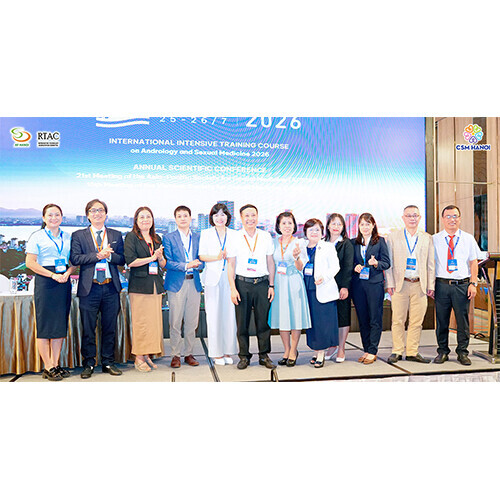
At the 15th Annual Scientific Conference of the Vietnam Society for Sexual Medicine, MSc. Dr. Pham Minh Ngoc presented research on the clinical characteristics and management approaches for sexual dysfunction in perimenopausal and...
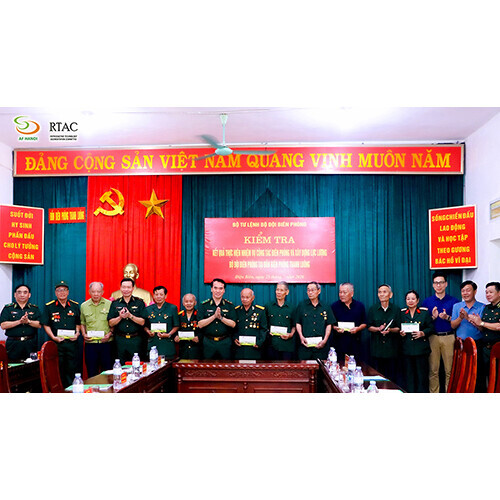
On the afternoon of July 25, marking the 79th anniversary of War Invalids and Martyrs Day (July 27, 1947 – July 27, 2026), Andrology and Fertility Hospital of Hanoi was honored to join the working delegation of the Party Committee...

Recently, the Andrology and Fertility Hospital of Hanoi (AF HANOI) participated in ASPIRE 2026, one of the most prestigious scientific forums in the Asia-Pacific region in the field of assisted reproduction, held from May 7–10, 2026,...
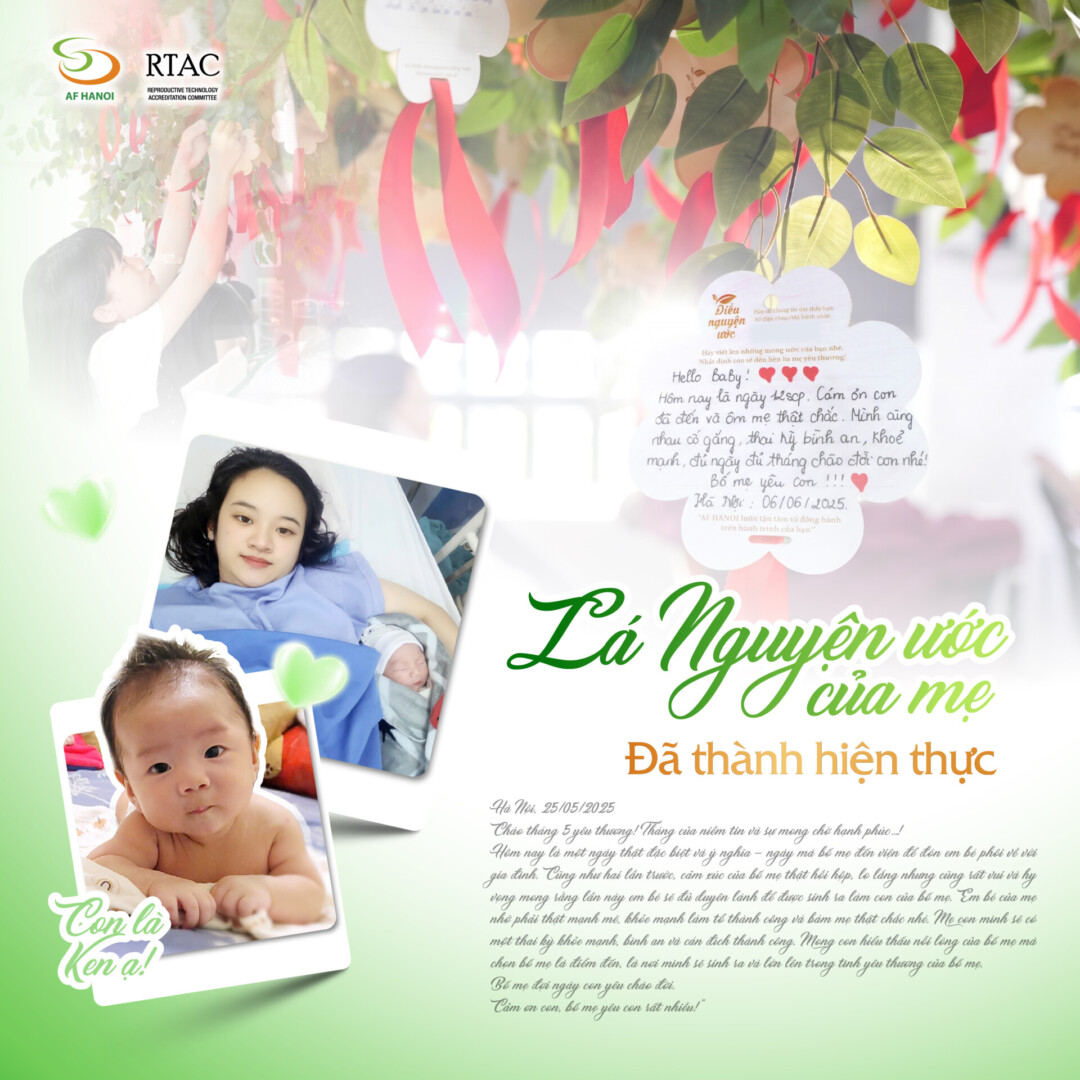
May 25, 2025 Hello to this loving May — the month of faith, hope and waiting for happiness! Today is such a special and meaningful day, the day Mom and Dad came to the hospital to bring our little embryo baby home to the family....
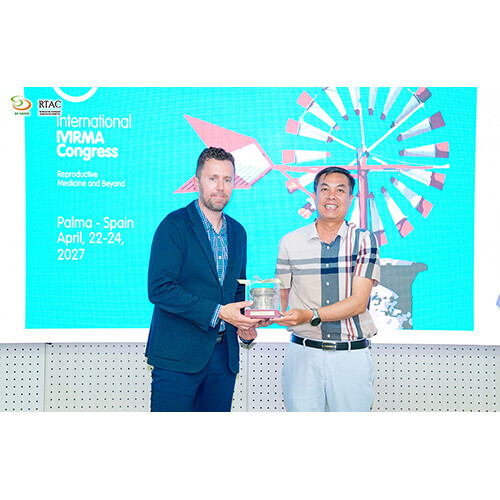
On May 6, 2026, the Andrology and Fertility Hospital of Hanoi, in collaboration with Merck Healthcare Vietnam, organized a professional exchange program on assisted reproduction with the participation of Associate Professor Marcos...


